

 Central Park Fall Foliage 2026: The 8 Best Places to See Autumn Leaves

From quiet woodland paths to a golden canopy of elms, here is where to find the Park’s best fall color—and when to go. Central Park does autumn in layers. A few red leaves appear against the last deep greens of summer; then the maples, oaks, cherries and elms take their turns. One bend in a path can feel like October, while the next still looks like September. That variety is part of the pleasure of a fall walk here: you don’t need every tree to peak on the same day to find something beautiful. When is the best time in 2026? Plan first for late October through early November, but stay flexible. Different species change at different times, and warmth, rain, wind and sunlight can shift the display. As of late September 2026, the Park is still largely green. If you have only one visit, check recent photos and local foliage updates shortly before you go. If you live nearby, come back every few days: the Park can look entirely different in a week. Our eight favorites run from the wild northern woods to the picture-perfect Pond near 59th Street. The numbered stops match the accompanying map.
1. North Woods: A woodland escape
Where: Northwest and mid-Park, roughly 101st to 110th Streets. The North Woods may be the closest Manhattan gets to a country walk. Follow the winding paths into the Ravine, where the Loch threads through a landscape of rock, rustic bridges and tall trees. Red maples and oaks add color among the lingering greens, and fallen leaves soften the trails underfoot. It is an especially rewarding place to wander without a strict itinerary: the view changes as you move from a shaded streamside path to an opening in the canopy. Allow extra time, wear comfortable shoes and look up as often as you look ahead.
2. Conservatory Garden: Autumn with a formal frame
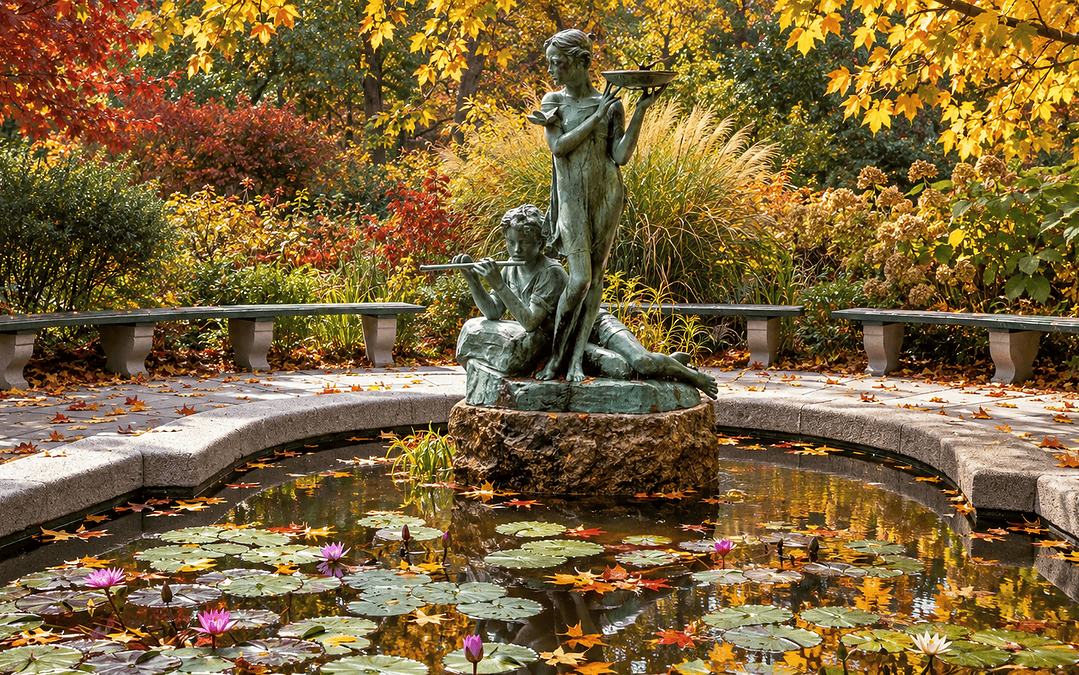
Where: East Side at 105th Street; enter through the Vanderbilt Gate on Fifth Avenue. For a quieter, more composed scene, step into the Conservatory Garden. Its three distinct garden rooms provide a graceful counterpoint to the wilder North Woods: straight paths, fountains, sculptural details and seasonal planting make it easy to frame a photograph. Fall color here is often more subtle than a blazing woodland panorama, but that is exactly its appeal. Take a slow circuit and notice how changing leaves play against stonework and evergreens. The garden generally opens at 8 a.m. and closes at dusk; confirm access before setting out.
3. The Pool: Color reflected in water
Where: West Side around 100th to 103rd Streets; an easy approach is from Central Park West at 100th Street. The Pool is one of the Park’s most satisfying fall photography spots. A calm morning can double the color in the water, while the winding shoreline offers a new composition every few steps. Maples and hickories bring reds and yellows; bald cypresses near the water shift to a rich coppery bronze. Walk the perimeter instead of stopping at the first opening. If you are carrying a camera, a low viewpoint can catch both the trees and their reflections in a single frame.
4. The Reservoir: A broad sweep of autumn
Where: Mid-Park, approximately 86th to 96th Streets. After the close, leafy paths of the northern Park, the Jacqueline Kennedy Onassis Reservoir feels wonderfully expansive. Its shoreline gives you long views across the water, a changing band of trees and the city beyond. The cherries that draw crowds in spring have a quieter autumn act: yellows, bronzes and reds around the track. Try the eastern side for warm light late in the day, or walk part of the loop until the skyline and foliage line up the way you want. Share the path courteously with runners and walkers.
5. The Ramble: A patchwork of color
Where: Mid-Park around 73rd to 79th Streets, north of the Lake. The Ramble rewards curiosity. Its narrow paths, rocky rises and dense mix of trees make fall feel intimate rather than panoramic. Look for the black tupelo around Tupelo Meadow, whose leaves can turn a striking scarlet, then keep moving: pockets of yellow and orange appear at different times around Azalea Pond and the woodland paths. Early morning brings gentler light and a better chance of hearing migrating birds. The paths can be uneven and confusing, so give yourself room to explore instead of trying to hurry through.
6. Bow Bridge and the Lake: The classic Central Park view
Where: Bow Bridge is on the west side of the Lake near 74th Street. Some scenes deserve their reputation. From Bow Bridge, autumn color spreads around the Lake, with branches, water and skyline all sharing the frame. Cross the bridge, then look back from the shore for a different view of its graceful curve. The nearby paths toward Cherry Hill offer more angles and, on a still day, wonderful reflections. This area gets busy on fall weekends; arrive in the morning for a more relaxed walk and cleaner photographs. A little cloud cover can be a gift, keeping bright leaves from disappearing into harsh highlights.
7. The Mall and Literary Walk: A ceiling of gold
Where: Mid-Park, roughly 66th to 72nd Streets. If you want the unmistakable Central Park autumn photograph, stand beneath the American elms lining the Mall. Their arching branches create a long, golden ceiling over the promenade. Walk its full length rather than taking one picture and moving on: the view shifts with the light, the people and the leaves scattered across the pavement. The southern end around Literary Walk has benches and statues that add a sense of scale. Come on a weekday morning if you can; the scene feels especially lovely when the path has space to breathe.
8. The Pond and Hallett Nature Sanctuary: A final flourish
Where: Southeast corner of the Park, around 59th to 62nd Streets. Finish at the Pond, where Gapstow Bridge, fall trees and the Midtown skyline meet in one of the Park’s most recognizable views. Circle toward the eastern shore and look across the water for reflections and changing perspectives. Nearby, Hallett Nature Sanctuary offers a smaller, more sheltered walk through trees and rocky overlooks; golden ginkgo leaves can be a highlight. Access to the sanctuary may vary, but the Pond and bridge are rewarding even when its paths are closed. This stop is particularly beautiful in the soft light before sunset.
Make the most of your fall visit
You can see all eight on a long north-to-south outing, beginning near 110th Street and finishing at the southeast corner. For an easier day, split the Park in two: visit the North Woods, Conservatory Garden, Pool and Reservoir on one trip, then explore the Ramble, Bow Bridge, Mall and Pond on another. Expect detours and take your time; Central Park is better enjoyed as a series of discoveries than a race between pins. For photographs, early or late light is flattering, but an overcast day can make reds and yellows surprisingly vivid. After rain, leaves deepen in color and the paths may be slippery. Bring a layer, check the weather, and remember that the best view may be just off your planned route. In autumn, it usually is.