
Central Park’s Quiet Tribute to the “Godmother of American Children”
 Tucked away in the bustle of Central Park—and easily overshadowed by its more famous neighbor—the Sophie Loeb Fountain stands as one of the park’s most meaningful yet underappreciated works of public art. While crowds gather around the beloved Alice in Wonderland sculpture by José de Creeft, few realize that just a short walk away is another tribute to the whimsical world of Lewis Carroll—one with a deeper social purpose and a quieter legacy.
The Sophie Loeb Fountain, located today in the James Michael Levin Playground near Fifth Avenue, is both a celebration of imagination and a memorial to a remarkable woman. Commissioned in 1936 by philanthropist August Heckscher, the fountain honors his close friend Sophie Irene Loeb (1876–1929), a tireless advocate for children’s welfare who earned the enduring title “the godmother of American children.”
Loeb’s life was devoted to improving the lives of vulnerable children and families in New York City. Through her work as a journalist and social reformer, she championed playgrounds, better housing, and systemic protections for youth. Together, Loeb and Heckscher campaigned for the expansion of children’s playgrounds in Central Park—an effort that would reshape how the park served the city’s youngest residents. The fountain, then, is not merely decorative; it is a physical embodiment of their shared vision.
A Sculptural Storybook in Stone
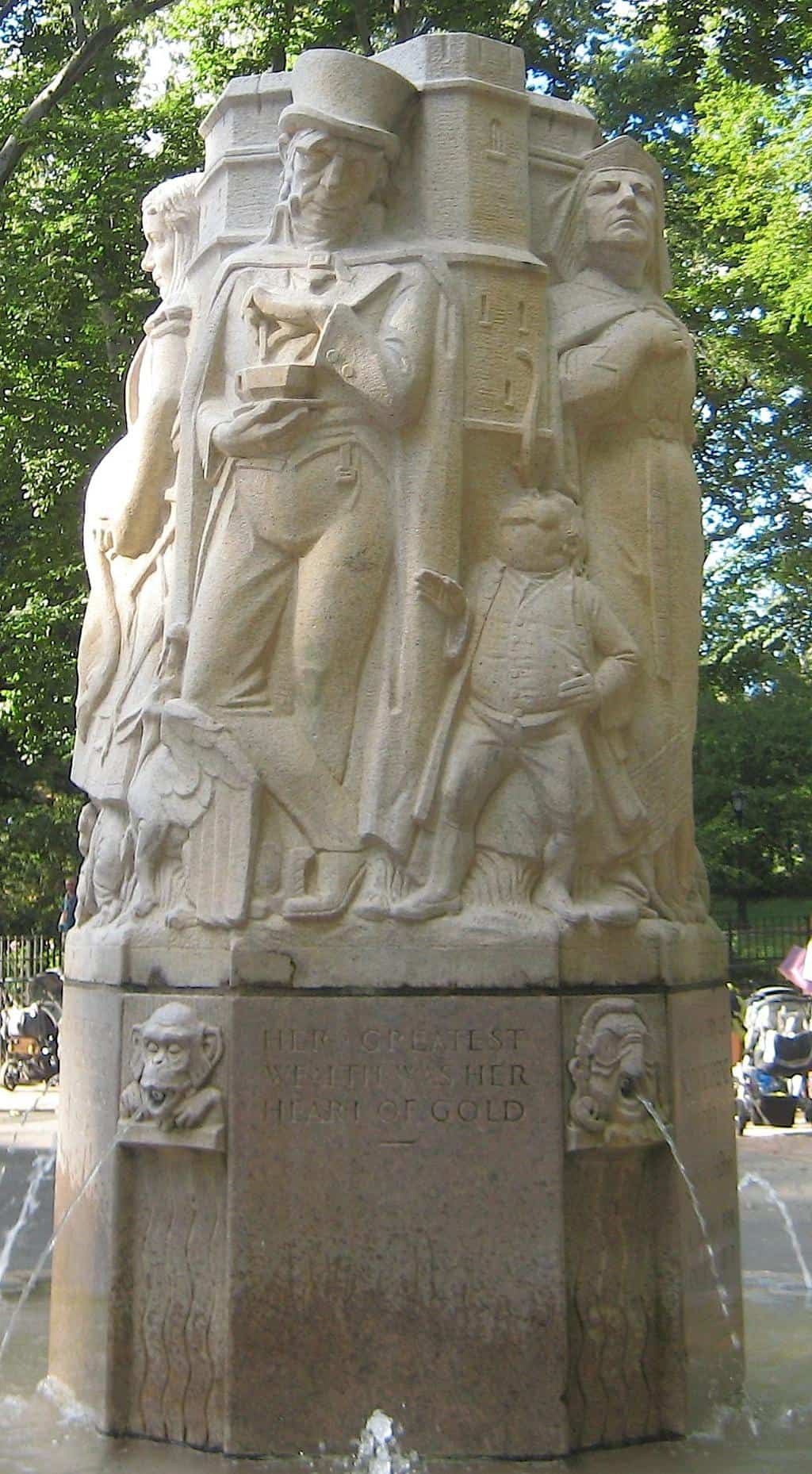
Created by American sculptor Frederick Roth—one of the most prolific artists represented in Central Park—the fountain is carved from white granite and populated by thirteen characters drawn from Alice’s Adventures in Wonderland and Through the Looking-Glass. Roth, who served as head sculptor for the Parks Department in the mid-1930s, brought a playful yet refined sensibility to the work, balancing storytelling with durability.
Among the figures are some of Carroll’s most iconic creations: the Mad Hatter, the Queen of Hearts, the White Rabbit, and the ever-grinning Cheshire Cat. But Roth’s attention to detail rewards closer inspection. Less obvious characters also appear, including the Duchess, the Gryphon, the Frog Footman, and Father William—memorably depicted balancing an eel on his nose. At the center stands Alice herself, holding a flamingo croquet mallet, her expression slightly more mature than the literary child, as if reflecting a thoughtful passage from innocence into awareness.
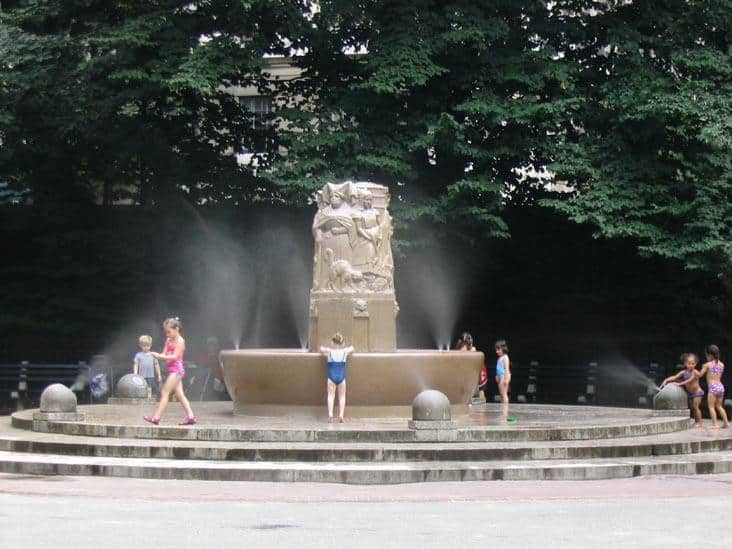
Originally conceived as a drinking fountain, the sculpture was first installed near the entrance to Heckscher Playground, Central Park’s earliest designated play area. There, it provided fresh water to children while surrounding them with imagery drawn from a beloved fantasy world—an inspired merging of function and imagination.
From Drinking Fountain to Water Play Landmark
In 1986, the fountain was relocated to the Levin Playground and thoughtfully adapted by the Central Park Conservancy into a water play feature. This transformation ensured that the monument remained not just a historical artifact, but a living part of the park’s daily rhythm. On warm days, children gather around it, splashing and laughing—just as Loeb herself might have hoped.
Though Sophie Loeb is not depicted in sculptural form, her presence is deeply felt. Her name is inscribed on the pedestal, anchoring the playful imagery in a legacy of compassion and advocacy. Nearby inscriptions, including the poignant line, “In the depths of despair may I never lose hope,” speak to her enduring commitment to social justice and her vision of “a home for every child.”
The absence of her likeness is, in a way, fitting. Rather than a static portrait, the fountain reflects Loeb’s impact through action—through the joy of children at play, the accessibility of public space, and the enduring importance of care for the most vulnerable.
A Quiet Counterpoint to a Famous Neighbor
In a park filled with celebrated landmarks, the Sophie Loeb Fountain remains a subtle discovery. It exists in quiet dialogue with the more famous Alice sculpture nearby—less grand, perhaps, but arguably more intimate and purposeful. Where Alice in Wonderland sculpture invites climbing and spectacle, the Loeb Fountain offers reflection, history, and a sense of continuity between imagination and real-world change.
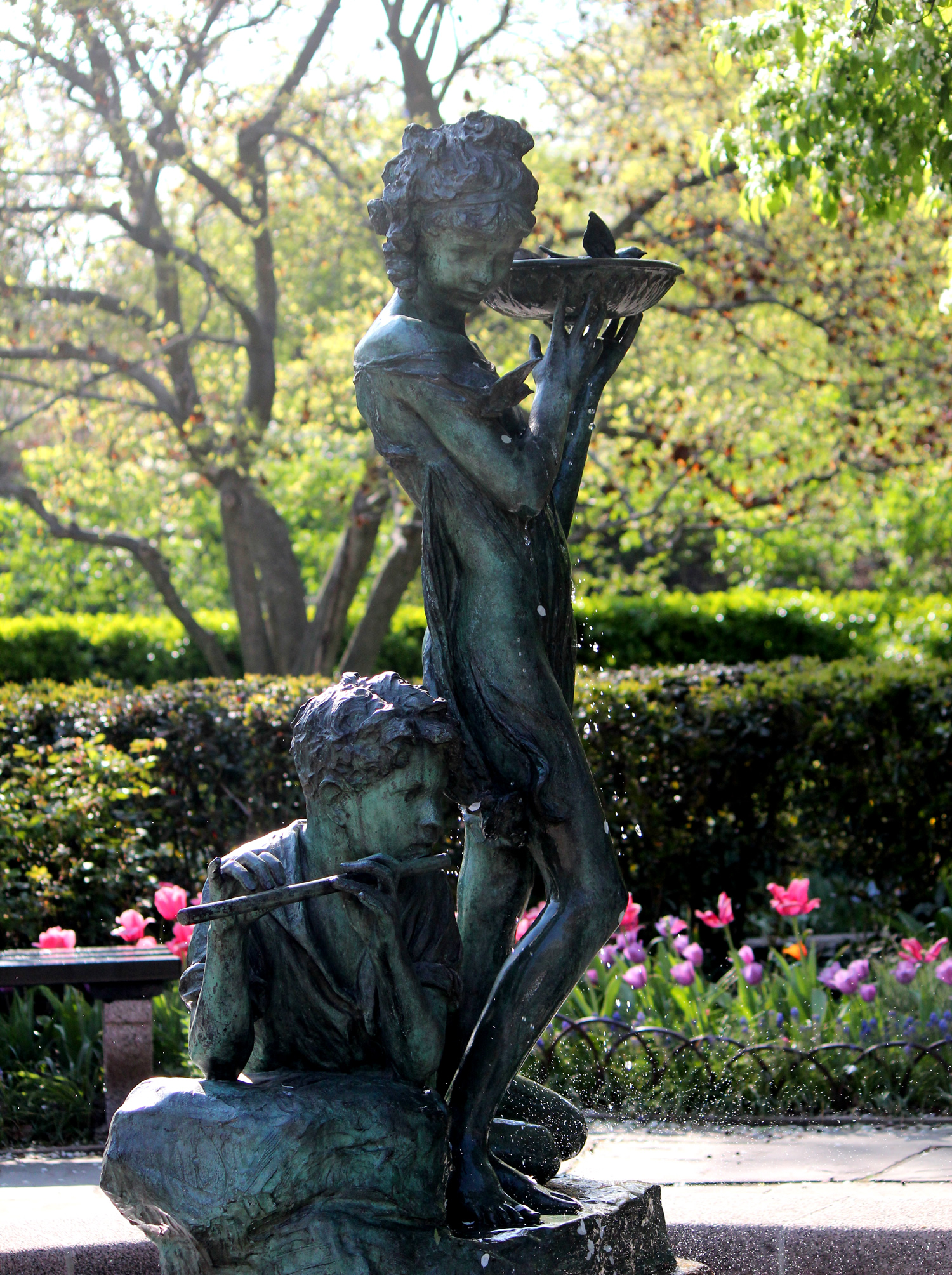
It is also part of a broader collection of Central Park monuments dedicated to influential women, including the Burnett Fountain and the Women’s Rights Pioneers monument. Together, these works help balance the historical narrative of the park, ensuring that figures like Sophie Loeb are remembered not just for who they were, but for what they built.
Legacy in Motion
Today, the Sophie Loeb Fountain stands as both artwork and living tribute—a place where literature, philanthropy, and urban life converge. It reminds us that even in a city as fast-moving as New York, there are spaces shaped by care, intention, and a belief in something better.
And perhaps that is its quiet magic: not just the carved figures of Wonderland, but the enduring idea that a park—like a story—can change lives.
Sophie Loeb Fountain
Conservatory Garden Blooms
Astilbe - June - August
Baby's Breath - June - July
Coneflower - July - September
Cornelian Cherry - March
Crabapples - April - May
Daffodils - March - May
Daylillies - June - August
Grape Hyacinths - April - May
Hellebores - March - April
Hollyhocks - June - July
Irises - March & May
Japanese Anemone - July - October
Lilacs, French - May
Lilacs, Japanese - June
Magnolias - April - May
Oakleaf Hydrangea - July - September
Ornamental Grasses - July - October
Peony - June
Phlox - June - September
Purple Coneflower - July - September
Rose of Sharon - July - September
Roses - June - October
Snowdrops - February - March
Spiraea - April - May
Squill - April - May
Tulips - April - May
Water Lilies - June - October